Choosing the China best Push-Back Storage racking manufacturer requires more than comparing factory prices. The right supplier must understand pallet flow, loading discipline, forklift access, and long-term warehouse safety. In a working facility, each lane may hold several pallets behind one another. Rails, carts, frames, and guides must cooperate smoothly. One bent guide can slow an entire shift.
Don Derewecki, a respected warehouse design consultant, offers a useful principle: “Storage equipment must serve the operation, not merely fill the building.” This idea matters when evaluating Chinese manufacturers. A reliable company should review pallet dimensions, load weights, SKU turnover, aisle widths, and available ceiling height before suggesting a design. It should also provide engineering drawings, load calculations, surface treatment details, installation guidance, and clear after-sales support.
Experience reveals small differences. Weld quality matters. So does the consistency of wheel movement under heavy loads. Ask for material certificates, production photographs, inspection records, and references from comparable warehouses. Certifications are helpful, but they should not replace independent verification.
No manufacturer is perfect. A polished website proves little. A low quotation may hide weaker steel, limited testing, or expensive replacement parts. This is where buyers must remain cautious. I would inspect a sample bay, test the loading sequence, and question how damage will be handled. The best Push-Back Storage partner is not simply the cheapest exporter. It is the supplier that explains limitations honestly and supports safe, practical performance after delivery.
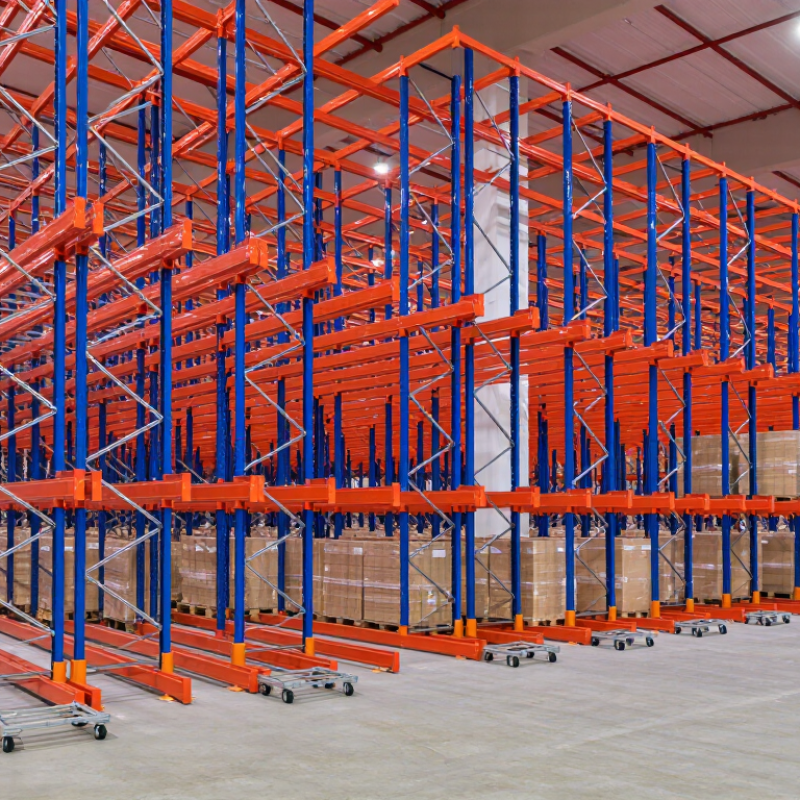
Push-back storage racking is a high-density pallet system using inclined rails and nested carts. Forklifts load pallets from one aisle position. Each new pallet pushes the previous one deeper into the lane. During retrieval, gravity moves the remaining pallets forward. This design usually supports two to six pallets in depth, depending on the load, rack height, and equipment. It normally follows a last-in, first-out flow, making it suitable for products with similar SKUs and moderate turnover. It is not an ideal choice for strict first-in, first-out inventory.
MHI’s 2023 Annual Industry Report found that 74% of supply chain professionals planned to adopt robotics and automation within five years. Push-back racking is not fully automated, but it supports that direction by reducing travel distance and aisle requirements.
In a practical warehouse review, check pallet weights, load stability, rail condition, and forklift turning space. A damaged pallet can create friction or uneven movement. That detail is easy to overlook. Density is not everything. Operators also need clear labels, impact protection, and scheduled inspections. A common mistake is selecting deep lanes only to maximize capacity. If daily picking needs direct access to every pallet, higher density may slow work instead. Good racking design balances storage volume, safety controls, replenishment speed, and the warehouse’s actual product rhythm.
Push-back racking systems work by storing pallets on nested carts or wheeled rails. A forklift places the first pallet at the front position. Each new pallet pushes the previous one deeper into the lane. Gravity then moves the pallets forward when the front load is removed.
This design creates high-density storage without requiring a forklift to enter the rack. It suits facilities handling several pallets of the same product. Operators should confirm pallet dimensions, load weights, and lane depth before installation. Uneven loading can cause movement problems. Small differences matter. Rack frames, rails, carts, and safety stops must be inspected regularly. A layout may look efficient on paper but perform poorly during busy shifts. Practical testing is still necessary.
Tips: Keep heavier pallets in lower positions. Train drivers to center each load carefully. Mark maximum lane capacity clearly. Check rails for debris and damage. Leave enough aisle space for safe turning. Do not assume every pallet will roll equally well; moisture, damaged bases, and changing weights can affect performance. Reviewing real warehouse data after installation often reveals adjustments that the original plan missed.
Chinese push-back rack manufacturers increasingly combine dense storage with engineered safety. MHI’s 2024 Annual Industry Report reported cloud computing use among 55% of respondents. This shift supports digital inventory records and better rack planning. Experienced factories usually offer two- to six-pallet-deep lanes, nested carts, adjustable beams, and powder-coated steel frames. Their engineers should verify pallet dimensions, load weight, aisle width, and forklift clearance before production. Small errors matter.
Quality control is a key feature. Reliable manufacturers inspect steel thickness, welding points, beam deflection, cart movement, and coating adhesion. They should provide load calculations, assembly drawings, inspection records, and installation guidance. A practical factory may test a loaded cart repeatedly, not only measure an empty sample. The MHI report also shows continuing investment in supply-chain technology, but automation does not replace physical inspections. That point is easy to overlook. Cost comparisons can also mislead when cheaper steel, thinner coatings, or unclear tolerances reduce service life.
Tips: Request a sample bay and a written load chart. Ask how the factory handles damaged rails, uneven floors, and seismic requirements. Compare total ownership cost, not only the quotation. Factory audits, third-party testing, and traceable material records improve reliability. No supplier is perfect. Your own warehouse data must challenge their assumptions.
China Best Push Back Storage Racking Manufacturer?
How to Evaluate a Reliable Chinese Supplier
Choosing a Chinese push back racking supplier requires more than comparing prices. In warehouse projects, I inspect production lines, weld quality, steel thickness, and surface coating. Photos help, but they can hide details. Request recent factory videos and a live video inspection. Check whether the supplier measures upright frames and rail dimensions consistently. Small deviations may affect pallet movement.
Ask for load calculations based on your pallet weight, beam levels, aisle layout, and seismic conditions. A reliable supplier should explain these figures clearly. Look for material certificates, inspection records, and traceable batch numbers. Independent testing can also verify load capacity and coating performance. Do not accept copied certificates without checking the issuing organization. That mistake is easy to make.
Request a sample bay before placing a large order. Measure the components yourself. Test trolley movement with real pallets, not empty ones. Ask for installation drawings, maintenance guidance, spare-part support, and a written warranty. Review references from warehouses with similar loads and operating temperatures. Communication matters too. Slow or vague replies may become serious during installation. No supplier is perfect. I once focused too heavily on factory appearance and overlooked unclear packaging details. A dependable supplier welcomes difficult questions, records changes, and admits limitations before production begins.
Push-back storage racking suits warehouses handling many pallets with relatively few product types. It stores pallets two to six positions deep, using wheeled carts that move along inclined rails. Forklifts load from the front, while new pallets push older ones backward. This design supports LIFO rotation and works well for beverages, packaged foods, spare parts, and seasonal inventory.
Space efficiency is its strongest advantage. Compared with selective pallet racking, push-back systems can reduce aisle requirements and increase storage density within the same building. The 2024 MHI Annual Industry Report surveyed more than 1,300 supply-chain professionals and identified warehouse automation and optimization as continuing investment priorities. Dense storage can support that goal, but only when pallet dimensions and load weights remain consistent. Small differences matter.
A practical installation needs clear load data, rail inspections, and disciplined forklift training. The rack must match the pallet, not the other way around. The U.S. Occupational Safety and Health Administration requires employers to maintain safe material-handling conditions, reinforcing the need for routine rack checks and damage reporting. Cold storage benefits from fewer aisles and better cubic utilization. However, push-back racking is not ideal for high-SKU operations requiring direct access to every pallet. That limitation is easy to overlook. A rushed design may save floor space but slow picking, increase handling errors, or create unstable loads. Fresh site measurements and a careful SKU review remain essential.
Push-back storage racking is designed for high-density pallet storage, typically using a last-in, first-out (LIFO) loading method. The planning ranges below represent common industry configurations rather than a specification for any single supplier or brand.
These systems are well suited to seasonal inventory, cold-storage operations, food and beverage warehouses, and products stored in relatively consistent SKU groups. Their main benefits include improved floor-space utilization, fewer aisles than selective pallet racking, faster loading and unloading with forklifts, and efficient storage for multiple pallets of the same product.
It stores multiple pallets behind one another in inclined lanes. It suits warehouses with many pallets and fewer product types.
Common designs hold two to six pallets deep. Deeper lanes increase density but may reduce access and control.
Forklifts place pallets on wheeled carts. Each new pallet pushes the previous pallet backward along the rails.
Push-back racking normally supports last-in, first-out rotation. It may not suit products requiring strict oldest-stock-first picking.
They should verify pallet size, load weight, beam height, aisle width, and forklift clearance.Small errors matter.
Request steel thickness records, welding inspections, coating tests, load calculations, and assembly drawings.A sample bay helps.
Yes, it can reduce aisle space and increase pallet density. However, dense storage may slow picking when product variety increases.
Check rails, carts, beams, welds, coatings, floor conditions, and visible impact damage. Report damaged parts quickly.A rushed inspection is risky.
No. It works poorly where every pallet needs direct access or product types change constantly.Your warehouse data should challenge the design.
Push-Back Storage racking is a high-density pallet storage solution designed to maximize warehouse space while maintaining efficient product access. It uses inclined rails and nested carts, allowing pallets to be loaded and unloaded from a single aisle. When a new pallet is placed into a lane, it gently pushes the previous pallet toward the back; during retrieval, pallets move forward by gravity. This system is especially suitable for storing multiple pallets of the same product and supports a last-in, first-out inventory approach.
Chinese push-back rack manufacturers typically offer customized designs, durable steel structures, flexible dimensions, and cost-effective production. When evaluating a reliable supplier, buyers should consider material quality, load capacity, manufacturing standards, engineering support, safety features, delivery capability, and after-sales service. Push-Back Storage systems are widely used in warehouses, distribution centers, cold storage facilities, and manufacturing operations. Their main benefits include improved space utilization, reduced aisle requirements, faster pallet handling, and better organization of high-volume inventory.

Fangjiu Shelf