China Top 10 Drive In Storage Rack Manufacturers

Time:2026-09-29 Author:Isabella
0%

Choosing among China’s top 10 Drive In Storage rack manufacturers requires more than comparing catalog photos and quoted prices. Warehouse operators need reliable evidence from design, production, testing, and installation. A strong manufacturer should understand forklift clearance, pallet dimensions, load distribution, aisle planning, and cold-storage conditions. Small details matter. Rail alignment matters.

This introduction examines leading Chinese suppliers through practical criteria, including engineering capability, steel quality, welding consistency, surface treatment, safety features, and delivery performance. It also considers whether manufacturers provide load calculations, layout drawings, installation guidance, and useful after-sales support. Factory experience can reveal important differences. A clean production line, calibrated cutting equipment, and traceable quality records often say more than attractive marketing language.

No ranking is perfect. Supplier strengths change by project size, export market, storage temperature, and budget. Some manufacturers may offer competitive prices but limited technical support. Others may provide excellent engineering while requiring longer production schedules. That difference deserves attention. Buyers should verify certifications, inspect samples, review completed warehouse projects, and confirm the actual steel specifications before signing a contract. A polished catalog is not proof.

The following outline presents ten notable Chinese manufacturers from a balanced, practical perspective. It focuses on measurable capabilities rather than exaggerated claims. Each company should be assessed against the warehouse’s real operating conditions, including forklift type, pallet turnover, load weight, and available building height. This approach helps readers identify a suitable Drive-in Storage partner with greater confidence and fewer costly surprises.
China Top 10 Drive In Storage Rack Manufacturers

Drive-In Storage Racks: LIFO Design and 60–80% Space Utilization

China Top 10 Drive In Storage Rack Manufacturers

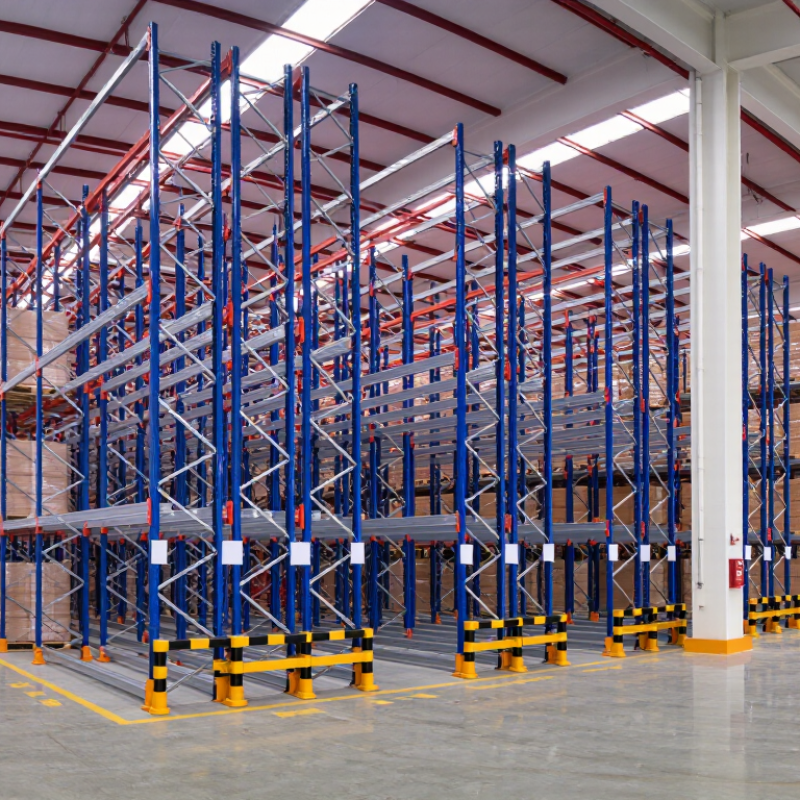
Drive-in storage racks support a last-in, first-out system. Forklifts enter deep lanes and place pallets on guided rails. This design removes many aisles, often raising floor space utilization to 60–80%. The actual result depends on pallet size, lane depth, ceiling height, and product turnover. It is usually suitable for large quantities of similar goods.

The best manufacturers should provide load calculations, layout drawings, and clear installation instructions. Experienced engineers check upright frames, support rails, back stops, and forklift clearance. In cold storage, steel coating and impact protection deserve extra attention. A small rail alignment error can affect pallet stability. Regular inspections should record bent frames, loose connections, and damaged guide rails.

Dense storage has a cost. Picking becomes slower when operators need to move older pallets. LIFO also may not suit products with strict rotation requirements. I have seen warehouses chase maximum density and later add extra handling equipment. That decision was not always efficient. A practical supplier studies traffic flow, pallet access, and expansion plans before recommending a rack depth. Buyers comparing China’s top ten manufacturers should examine engineering experience, testing records, production control, and after-sales response, rather than relying only on advertised capacity. Safety labels should remain visible. Installation quality matters just as much as steel strength.

Drive-In Storage Racks: LIFO Design and 60–80% Space Utilization

Drive-in pallet racking is designed for high-density storage and follows the Last-In, First-Out (LIFO) principle. Its typical space utilization is compared below with other common pallet storage systems.

Drive-in racks generally achieve approximately 60–80% space utilization because forklifts enter the storage lanes and multiple pallets are stored in depth. Actual results depend on warehouse dimensions, pallet sizes, SKU variety, inventory turnover, and aisle configuration.

Ranking China’s Top 10 Manufacturers by Capacity, Standards, and Certifications

Ranking China’s Top 10 drive-in storage rack manufacturers requires more than comparing factory size. Capacity matters, but usable evidence matters more. A large workshop, automated welding lines, and documented monthly output can indicate production strength. Buyers should also ask whether quoted capacity reflects normal operations or peak production. Those figures are not always comparable.

Standards and certifications help separate confident claims from verifiable practice. Check whether drawings specify load ratings, steel grades, connection details, and installation tolerances. Ask for current certificates and confirm their scope covers the relevant products or manufacturing processes. A certificate alone cannot prove every rack design is suitable. Independent inspections, traceable material records, and completed project references add useful context. Look closely.

A credible top-ten assessment should weigh these factors together, rather than reward the largest stated output. Site visits can reveal practical details: organized steel storage, calibrated testing equipment, and clear inspection records. Yet even these signs have limits. Production conditions change, and a polished factory tour may not reflect every shift. Rankings are therefore best treated as a starting point, not a purchasing guarantee. Compare evidence, request project-specific calculations, and note any missing documentation before making a decision.

Top 10 Chinese Drive-In Rack Manufacturers: Products, Factories, and Markets

China’s leading drive-in rack manufacturers serve warehouses that need dense storage for uniform goods.

Their product ranges commonly include uprights, load rails, entry guides, and protective guards. Designs differ in lane depth, pallet size, and forklift access. Small details matter. A misplaced guide can slow daily loading.

Factory capabilities vary across the top ten suppliers. Some operate automated cutting and welding lines, while others rely on more manual production.

Buyers should review material specifications, weld quality, coating consistency, and load-test records.

Ask how the supplier checks tolerances and handles replacement parts. Factory visits or independent inspections can clarify what a brochure cannot. Export experience also matters, since packaging and shipping affect delivery condition.

These manufacturers serve domestic distribution centers and overseas markets, including food, cold-storage, and bulk-goods operations.

Yet a suitable rack depends on site conditions, not reputation alone. A narrow aisle or uneven floor can change the design.

Tips: Share pallet dimensions, load weights, and forklift details before requesting a quotation. Compare drawings and inspection records, not just prices. Leave room for maintenance access; it is often overlooked.

Load, Aisle, and Safety Benchmarks: EN 15629, FEM 10.2.07, and 500–1,500 kg

China Top 10 Drive In Storage Rack Manufacturers

For drive-in racking, a quoted capacity of 500–1,500 kg per pallet position is only a starting point. Actual ratings depend on pallet dimensions, rack height, beam and upright design, and the number of pallets stored in each lane. Ask for calculations based on your real load pattern, not a headline figure. EN 15629 helps define storage-system specifications, while FEM 10.2.07 provides relevant design guidance. Confirm the applicable editions and project assumptions with a qualified engineer.

Aisle space matters as much as load capacity. Measure the forklift’s turning path, mast height, and approach angle with a loaded pallet. A narrow entrance may save floor space but increase contact risk and slow replenishment. Check upright protection, guide rails, pallet stops, and floor condition before installation. A drawing can look tidy. On site, one uneven joint can change the way a forklift enters a lane. That detail is easy to miss.

Tips: Share pallet weight, size, and overhang limits with every manufacturer. Request load signs for each rack configuration, plus inspection and maintenance guidance. Compare clear aisle width and usable lane depth, not just storage density. Keep a record of damage and repairs. It is not perfect paperwork, but it helps teams spot repeated impacts before small dents become a bigger concern.

Comparing Prices, Lead Times, Warranties, and Export Performance Metrics

China Top 10 Drive In Storage Rack Manufacturers

Price comparisons should include steel grade, pallet capacity, coating, and installation scope. In 2024, buyer quotations commonly ranged from 80 to 180 USD per pallet position for basic drive-in systems. This is a planning range, not a universal price. MHI’s 2024 Industry Report highlights continuing pressure to improve warehouse productivity and control operating costs. Dense storage can reduce aisle space, but it may increase forklift handling time.

Lead time usually varies from 20 to 45 days after drawing approval. Export-ready suppliers should provide packing photographs, loading plans, and inspection records. Warranty periods often range from 3 to 10 years for structural components. However, coverage may exclude forklift impact, corrosion, and incorrect installation. Read the exclusions carefully. A low quote can become expensive after port charges, replacement parts, or delayed commissioning.

Export performance needs measurable evidence. UN Comtrade data under HS 730890 can help compare structural-steel export activity, although this code also includes non-racking products. Request shipment references, annual export volume, destination markets, and on-time delivery records. The World Bank’s Logistics Performance Index also shows why port reliability and customs efficiency affect landed cost. One weakness remains: suppliers may present impressive export totals without separating racking from other steel goods. Independent inspection and a small pilot order reduce that uncertainty.

FAQS

What should a manufacturer ranking consider?

Compare production capacity, documented quality practices, and project experience. A large factory alone proves little.

How can I verify a manufacturer’s stated production capacity?

Ask whether output reflects typical or peak operations. Review production records, and consider a site visit. One tour may not show every shift.

Which documents help assess rack quality?

Request current certificates, material records, inspection documents, and completed project references. Check that certificates cover the products or processes involved.

What information should a project-specific rack calculation include?

Provide pallet weight, dimensions, overhang limits, rack height, and storage pattern. Headline capacity figures need context.

Is 500–1,500 kg per pallet position a reliable capacity estimate?

Treat it as a starting range, not a promise. Actual capacity depends on the rack design, pallet size, height, and lane configuration.

What do EN 15629 and FEM 10.2.07 contribute?

They provide relevant specification and design guidance. Confirm applicable editions and project assumptions with a qualified engineer.

What should be checked when measuring forklift aisles?

Assess the loaded forklift’s turning path, mast height, and approach angle. A narrow entrance can save space but raise contact risks.

Which physical details matter before installation?

Check floor condition, guide rails, upright protection, pallet stops, and aisle width. One uneven floor joint can affect entry.

What should warehouse teams record after installation?

Keep track of damage, repairs, and recurring impacts. The paperwork may be imperfect, but patterns can reveal problems early.

Conclusion

This guide presents a practical overview of Drive-in Storage racks and their role in maximizing warehouse capacity through a LIFO layout. With space utilization commonly reaching 60–80%, this system is especially suitable for high-volume, low-variety goods. The article ranks China’s top 10 manufacturers according to production capacity, factory capability, quality management, international standards, and relevant certifications, while comparing their product ranges, target markets, and export experience.

It also explains essential load, aisle, and safety considerations, including typical capacities from 500 to 1,500 kg and benchmarks related to EN 15629 and FEM 10.2.07. Buyers will find a clear framework for evaluating structural quality, customization options, pricing, lead times, warranty terms, installation support, and delivery performance. The goal is to help warehouse operators and importers make informed purchasing decisions based on measurable manufacturing and service capabilities rather than brand reputation alone.

Isabella

Isabella

Isabella is a dedicated marketing professional with a sharp focus on driving brand growth and engagement through strategic content creation. With an extensive background in digital marketing, she combines her passion for storytelling with her keen understanding of industry trends to deliver......