Who Are the Top Narrow Aisle Storage Manufacturers in China?

Time:2026-10-09 Author:Aria
0%

Selecting the right Narrow Aisle Storage manufacturer in China requires more than comparing prices. Warehouse managers must examine engineering quality, installation support, product durability, and long-term service. A compact aisle may look efficient on a drawing, yet poor tolerances can create difficult truck movements, damaged pallets, and slower picking.

This guide explores leading Chinese manufacturers through practical evaluation criteria. It considers rack design, material strength, load calculations, customization ability, and quality-control procedures. It also reviews how manufacturers support different warehouse environments, including cold storage, e-commerce fulfillment, and high-bay distribution centers. Real experience matters here. A supplier should provide clear technical drawings, transparent specifications, and evidence from completed projects.

No ranking is perfect. Company capabilities can change, and online information may not show the whole picture. Buyers should verify factory capacity, inspection records, export experience, and after-sales response before signing a contract. Site measurements are essential. So is a careful discussion with the manufacturer’s engineers.

The best supplier is not always the cheapest. It should understand aisle width, forklift requirements, rack loading, and future expansion. It should also communicate clearly when a proposed design has limitations. This article introduces the top Narrow Aisle Storage manufacturers in China and explains how to compare them responsibly. The goal is a practical starting point for safer, more reliable warehouse investment.
Who Are the Top Narrow Aisle Storage Manufacturers in China?

What Is Narrow Aisle Storage and How Does It Work?

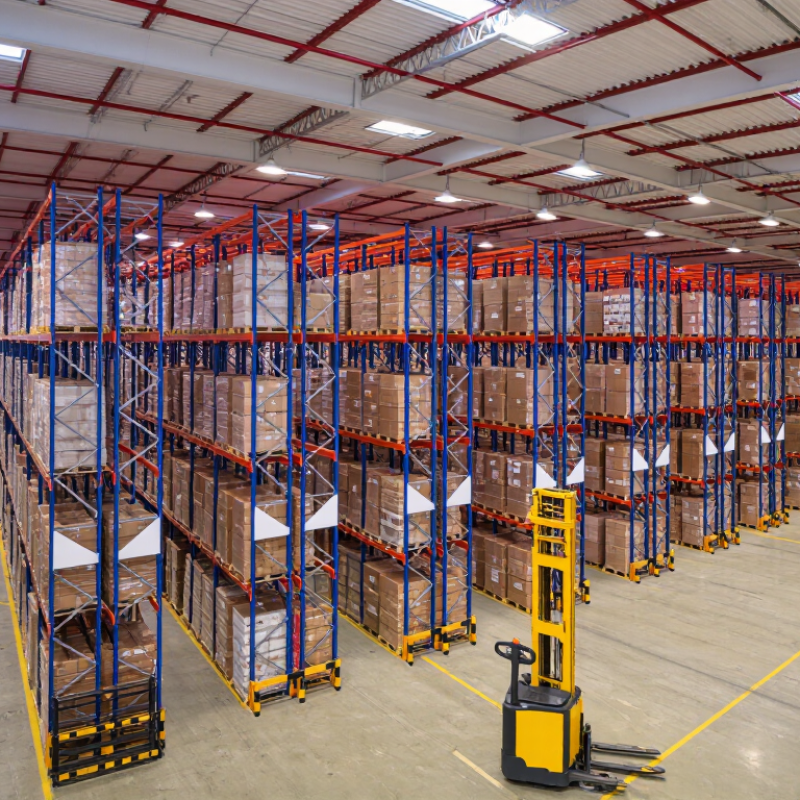
Narrow aisle storage is a pallet racking system designed to use limited warehouse space more efficiently. Its aisles usually measure about 1.6 to 2.0 meters wide, narrower than conventional forklift lanes. Special reach trucks or turret trucks travel through these compact aisles and lift pallets vertically. This arrangement increases storage capacity without expanding the building.

The system normally includes upright frames, beams, floor guides, and safety barriers. Some designs use rail guidance or wire guidance to improve vehicle control.

A practical layout considers pallet size, load weight, rack height, floor flatness, and daily traffic.

Chinese manufacturers are often evaluated by their engineering drawings, load testing, material quality, installation support, and ability to adapt standard parts for unusual buildings. Certifications and traceable inspection records also matter.

Details matter here. A two-centimeter floor variation can affect truck stability. A poorly positioned sprinkler may reduce usable rack height. A drawing can look efficient, yet operators may struggle with turning space.

This is where site measurements and operator feedback become valuable. I would not judge a manufacturer by price alone. A cheaper frame may create alignment problems later. Even experienced teams can miss maintenance clearance. That deserves a second review.

How Are Chinese Narrow Aisle Storage Manufacturers Evaluated?

Chinese narrow aisle storage manufacturers should be evaluated through measurable operating evidence, not attractive catalog images. The IFR World Robotics 2024 report recorded 276,288 industrial robot installations in China during 2023. This wider automation growth raises expectations for warehouse equipment. Buyers should check verified load capacity, aisle width, lifting height, positioning accuracy, and cycle performance under full load.

Safety remains a practical test. Ask for risk assessments, emergency-stop response times, overload protection, and compliance records for the target market. MHI’s 2024 Annual Industry Report identifies robotics and automation as major investment priorities across supply chains. However, a machine that performs well in a showroom may struggle in a dusty warehouse with uneven floors. Request a site trial. Measure pallet retrieval time, battery endurance, noise, and recovery after faults.

Service quality often separates capable manufacturers from average ones. Review spare-parts availability, remote diagnostic procedures, technician response times, software integration, and operator training. Total cost should include installation, maintenance, energy use, and downtime, not only the purchase price. A lower quotation can become expensive later. Some evaluations also overlook data security and upgrade flexibility. That is a mistake. Independent test records and customer references are useful, but references may still be selective. Buyers should compare at least three proposals using identical operating conditions.

Who Are the Top Narrow Aisle Storage Manufacturers in China? - How Are Chinese Narrow Aisle Storage Manufacturers Evaluated?
Evaluation Dimension Practical Benchmark What a Strong Manufacturer Should Provide Recommended Verification Evidence Importance
Product Configuration Selective pallet racking, very narrow aisle racking, mobile racking, or shuttle-compatible configurations A complete product range that can be matched to pallet dimensions, inventory turnover, floor area, and required accessibility Technical drawings, load tables, configuration proposals, and references for comparable warehouse layouts High
Aisle-Width Optimization Common narrow-aisle layouts generally use approximately 1.8–2.5 m aisles, depending on the truck and pallet type Accurate aisle calculations based on truck turning radius, pallet overhang, rack height, and operating clearances CAD layout, vehicle specification sheet, turning-path analysis, and site measurement report High
Load Capacity Typical pallet positions may be designed for approximately 500–4,000 kg per level, subject to beam length and rack height Capacity calculations that clearly state permissible loads per level, bay, frame, and upright Stamped calculations, load plaques, test records, and installation acceptance documents High
Material and Steel Quality Cold-formed or roll-formed structural steel is widely used for industrial pallet racking; thickness varies by design load Traceable steel sourcing, controlled forming processes, consistent profiles, and corrosion-protection options Material certificates, coating specifications, thickness records, and incoming-quality inspection reports High
Safety Design Key protections include upright guards, row spacers, beam locks, pallet supports, back protection, and anchoring Safety accessories selected according to impact risk, seismic conditions, pallet type, and forklift operation Risk assessment, safety detail drawings, installation instructions, and inspection checklist High
Standards and Compliance Relevant projects may require compliance with local building rules and recognized storage-rack standards Ability to design against applicable requirements such as EN 15512, FEM guidance, RMI specifications, or project-specific codes Declaration of conformity, engineering calculations, third-party inspection, and project compliance documentation High
Manufacturing Capability Efficient production normally includes automated roll forming, welding, cutting, coating, and quality inspection Stable production capacity, documented process controls, and the ability to manage customized dimensions and batch orders Factory audit, production-line photographs, process flow chart, inspection plan, and capacity statement High
Surface Treatment Powder coating and other industrial coatings are commonly used; coating performance depends on pretreatment and film thickness Consistent color, adhesion, corrosion resistance, and coating thickness suitable for the warehouse environment Coating test results, pretreatment records, color specification, and salt-spray or adhesion test reports where required Medium
Customization Capability Common variables include pallet size, bay width, beam level, rack height, floor tolerance, and sprinkler clearance Engineering support for non-standard dimensions without compromising load capacity or safe operating clearances Approved shop drawings, revision control, prototype approval, and engineering change records High
Installation Quality Rack performance depends heavily on level floors, correct anchoring, plumbness, beam locking, and aisle protection Qualified installation teams, documented installation procedures, and final handover inspection Installer certificates, torque records, alignment measurements, inspection photographs, and completion report High
Warehouse-System Integration Narrow-aisle systems may be used with reach trucks, turret trucks, guided vehicles, barcode systems, or warehouse software Coordination between rack geometry, vehicle specifications, warehouse controls, fire protection, and material-flow requirements Interface drawings, equipment compatibility statement, traffic-flow plan, and commissioning records High
Delivery and Export Support International projects require accurate packing lists, export documentation, suitable packaging, and predictable lead times Clear production schedule, container-loading plan, spare-parts policy, and multilingual technical documentation Sample packing list, quality-release procedure, shipping records, installation manual, and warranty terms Medium
Quality Assurance Critical controls include dimensional accuracy, weld quality, coating condition, load-bearing components, and final assembly checks A documented quality-management system with inspections at raw-material, in-process, and final stages Inspection and test plan, nonconformity records, corrective-action reports, and traceability documents High
After-Sales Service Industrial storage systems require support for maintenance, accidental damage, modifications, and periodic inspections Defined response times, replacement-part availability, inspection support, and practical warranty coverage Service-level agreement, warranty certificate, maintenance guide, spare-parts list, and service case records Medium
Total Cost of Ownership Purchase price should be assessed together with installation, operating equipment, maintenance, floor work, and future expansion A transparent quotation that separates equipment, accessories, engineering, logistics, installation, and optional services Itemized quotation, lifecycle-cost comparison, expansion pricing, and payment schedule High
Benchmark figures are indicative engineering ranges rather than universal limits. Final rack capacity, aisle width, and compliance requirements must be confirmed through site-specific calculations, equipment data, floor conditions, and applicable local regulations.

Which Chinese Manufacturers Lead in Narrow Aisle Storage Solutions?

Chinese manufacturers leading narrow aisle storage solutions usually fall into three groups: established warehouse equipment producers, forklift specialists, and integrated storage system builders. The strongest suppliers combine pallet racking, narrow aisle trucks, warehouse software, and installation support. Their advantage is practical coordination. A rack beam must match truck reach, floor tolerance, and turning clearance.

Experienced manufacturers begin with a site survey. They measure aisle width, pallet dimensions, load weight, ceiling height, and daily traffic. Some use digital layouts to test vehicle movement before production. Others provide sample bays for load testing. This hands-on process reveals problems early, especially when existing floors are uneven or columns limit access. Not every supplier handles these details equally well.

Reliable Chinese manufacturers also show traceable steel grades, weld inspection records, load calculations, and maintenance procedures. Export experience matters, but it should not replace local engineering evidence. Ask for installation references, response times, spare-part availability, and operator training records. A supplier may offer an impressive automated design yet overlook emergency access or seasonal inventory changes. That weakness is easy to miss during a sales presentation. Buyers should compare documented performance, not only price or factory size. The leading companies are usually those that can adjust designs honestly when the original plan proves unrealistic.

What Technologies and Services Do Top Manufacturers Provide?

The strongest narrow aisle storage manufacturers in China offer more than steel frames and forklifts. They provide warehouse engineering, automation integration, and long-term technical support. Their teams study load weight, pallet dimensions, aisle clearance, floor flatness, lifting height, and traffic patterns before proposing equipment. Not just steel.

According to the International Federation of Robotics’ World Robotics 2024 report, China installed 276,288 industrial robots in 2023, representing 51% of global installations. This industrial foundation supports advanced warehouse solutions, including narrow aisle reach trucks, automated storage and retrieval systems, shuttle systems, and robotic pallet movement. Leading manufacturers also connect equipment with warehouse management software, sensors, barcode systems, and real-time inventory dashboards. These tools can reduce travel distance and improve stock accuracy. However, software integration often becomes difficult when older warehouse systems remain in use.

Service quality separates capable suppliers from ordinary fabricators. Strong providers conduct site surveys, simulate storage capacity, install safety barriers, train operators, and supply replacement components. MHI’s 2024 Annual Industry Report also identifies robotics, automation, and artificial intelligence as important supply-chain investment priorities. Buyers should request testing records, maintenance schedules, response-time commitments, and total-cost calculations. A low quotation may hide battery replacement, software updates, or floor repairs. That gap matters. Even experienced manufacturers can underestimate seasonal congestion. A pilot aisle, followed by measured performance checks, is often more reliable than accepting a perfect sales presentation.

What Leading Chinese Narrow-Aisle Storage Manufacturers Typically Provide

The chart presents typical technical ranges associated with narrow-aisle storage solutions, including very-narrow-aisle equipment, high-lift capability, warehouse software integration, and precision positioning. Actual specifications vary by equipment type, load design, warehouse height, and operating conditions.

How Can Buyers Choose the Right Chinese Manufacturer?

Choosing a Chinese narrow aisle storage manufacturer requires more than comparing unit prices. Start with your actual warehouse measurements. Record aisle width, pallet dimensions, load weight, lift height, floor flatness, and daily operating hours. A system that looks efficient on paper may become difficult when forklifts turn with only a few centimeters of clearance.

China’s logistics scale supports strong manufacturing depth. The China Federation of Logistics and Purchasing reported social logistics costs of approximately RMB 18.2 trillion in 2023. The World Bank’s 2023 Logistics Performance Index gave China a score of 3.7 out of 5. These figures indicate a demanding logistics environment, but they do not guarantee every factory’s quality. Ask for production records, load-testing evidence, inspection procedures, and traceable component documentation. ISO certification helps, but independent verification is still necessary. A polished showroom can hide weak after-sales support.

Tips: Request a layout simulation using your real pallet drawings. Check turning radius, rack tolerance, charging space, and emergency access. Ask how quickly spare parts arrive in your country. Compare the warranty with the expected operating cycle, not just the purchase price. Speak with two existing customers if possible. Also, accept some uncertainty. Forecasts change, warehouse floors settle, and operators make mistakes. A reliable manufacturer explains these risks instead of promising perfect performance.

FAQS

How should Chinese narrow aisle storage manufacturers be evaluated?

Evaluate measurable evidence, not polished catalog images. Check load capacity, aisle width, lifting height, positioning accuracy, and full-load cycles. A showroom test is not enough.

What should a buyer measure during a site trial?

Measure pallet retrieval time, battery endurance, noise, and fault recovery. Test the equipment on uneven floors and in dusty areas. Real conditions matter more.

Why is a site survey important before selecting equipment?

Engineers should measure aisle width, pallet size, load weight, ceiling height, and daily traffic. They should also check columns and floor tolerance. Small errors can block access.

Which safety records should manufacturers provide?

Request risk assessments, emergency-stop response times, overload protection records, and market-specific compliance documents. Ask how operators receive training. Safety claims need evidence.

How can buyers judge a manufacturer’s engineering quality?

Review steel traceability, weld inspection records, load calculations, and maintenance procedures. Ask for sample-bay testing when possible. Good designs still need practical checking.

What service capabilities should a reliable supplier offer?

Check spare-parts availability, remote diagnostics, technician response times, software integration, and operator training. Ask for written service targets. Promises can sound better than reality.

How should the total cost be calculated?

Include installation, maintenance, energy use, software, spare parts, and downtime. A lower purchase price may become expensive later. The cheapest quote is not always economical.

How should buyers compare different proposals fairly?

Compare at least three proposals under identical operating conditions. Use the same pallet weight, aisle width, retrieval volume, and service expectations. Customer references help, but they may be selective. A perfect forecast is impossible.

Conclusion

Narrow Aisle Storage is a warehouse system designed to maximize space by reducing the width of storage aisles while using specialized lifting equipment and organized racking layouts. This approach increases pallet capacity, improves vertical space utilization, and supports efficient inventory access. Chinese manufacturers of these systems are commonly evaluated by product quality, structural safety, engineering experience, customization capabilities, production standards, delivery reliability, and after-sales service.

Leading manufacturers typically provide pallet racking, narrow-aisle trucks, automated storage and retrieval options, warehouse management software, safety equipment, installation, and maintenance support. Some also use data analysis, remote monitoring, and intelligent control technologies to improve warehouse accuracy and operating efficiency. Buyers should compare load requirements, facility dimensions, equipment compatibility, automation needs, certifications, total project cost, warranty terms, and technical support before making a decision. A suitable supplier should offer a complete, scalable solution that balances storage density, accessibility, safety, and long-term operating value.

Aria

Aria

Aria is a dedicated marketing professional with a deep passion for innovative strategies and a keen understanding of our company's product offerings. With a wealth of experience in the industry, Aria excels at crafting engaging content that highlights the unique features and benefits of our......