Choosing reliable Steel Containers suppliers in China requires more than comparing prices. A strong supplier must demonstrate manufacturing experience, material knowledge, and dependable quality controls. This guide explores leading companies that serve construction, logistics, industrial storage, and specialized transport needs.
Real evaluation begins on the factory floor. Look for clean welding lines, reinforced corner posts, accurate dimensions, and even protective coatings. Ask for material certificates, inspection records, and clear production photographs. A trustworthy supplier should explain its steel grades, fabrication process, load capacity, and testing methods without vague promises. Export experience also matters, especially when containers must meet destination-market requirements. Small details can reveal larger standards.
No supplier is perfect. A polished website proves little. Some companies may communicate well but provide limited after-sales support. Others may offer excellent prices while lacking consistent documentation. Buyers should compare production capacity, delivery schedules, customization options, and replacement policies before signing an agreement. Independent inspections can reduce uncertainty, particularly for large orders or repeated purchases. It is also wise to request a sample or conduct a video factory audit when travel is impractical.
This overview is designed for informed comparison, not quick conclusions. Supplier rankings can change as facilities, certifications, and service teams develop. Readers should verify current credentials directly and match each supplier with their actual project conditions. A container that looks robust may still fail under poor loading, unsuitable coating, or careless handling. Good decisions come from evidence, practical questions, and realistic expectations.
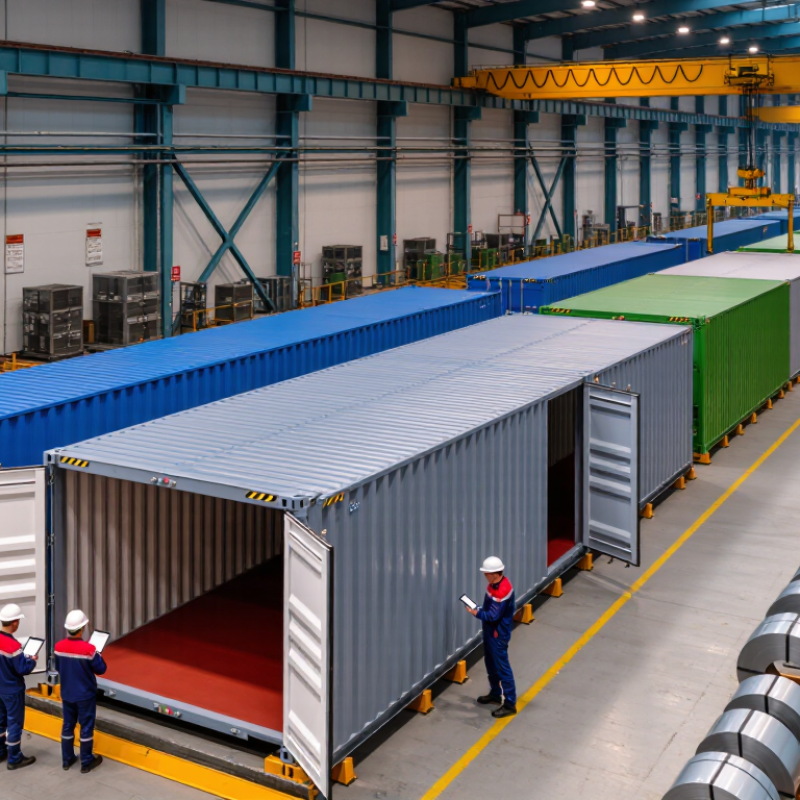
Steel containers are rigid enclosures made from carbon steel, weathering steel, or stainless steel. Their structure usually includes corrugated walls, reinforced corner posts, locking doors, and a strong floor. These parts help the container resist impact, stacking pressure, wind, and repeated handling. A standard unit may serve as a transport box, storage room, workshop, or equipment shelter.
Their uses depend on size, coating, and internal design. Shipping containers protect machinery, spare parts, furniture, and packaged materials during road, rail, or sea transport. On construction sites, smaller steel containers can store tools and electrical equipment.
Ventilation openings reduce condensation, while insulation helps control temperature. Stainless steel suits damp or hygienic areas, but it often costs more. Weathering steel can resist outdoor exposure, although poor drainage still causes problems.
Inspection matters before purchase or loading. Check the door seals, floor condition, corner castings, welds, and coating thickness. A damaged floor may weaken under concentrated loads, even when the walls look sound.
Suppliers in China may offer customized dimensions, shelving, insulation, or lifting points. However, buyers should confirm material grades, load ratings, test documents, and export requirements. Price alone is a weak guide.
I have found that a container chosen only for appearance can perform badly in humid conditions. No design fits every site perfectly. Careful measurements and a clear use plan prevent expensive changes later.
China offers a deep manufacturing base for steel containers. The World Steel Association reported about 1,005 million tonnes of crude steel production in China during 2024. This scale supports stable material access, wider fabrication capacity, and competitive pricing for overseas buyers.
Practical advantages appear on the factory floor. Suppliers can source galvanized sheets, corner castings, locking bars, and welding equipment nearby.
Many factories also produce containers around ISO 668 dimensions, supporting compatibility with global transport systems. UNCTAD’s Review of Maritime Transport 2024 highlights China’s continuing importance in global shipping and container logistics. Shorter domestic supply routes can reduce purchasing delays and simplify replacement orders.
But scale is not proof of quality. It is only a starting point. Buyers should request mill certificates, weld inspection records, coating thickness results, and dimensional reports. A sample container may look strong while hidden weld defects remain. That risk deserves attention.
Factory audits, independent inspections, and documented testing create stronger evidence than polished product photos. Suppliers with export experience can also explain loading plans, port procedures, and damage prevention during long voyages.
Still, communication may fail when specifications are vague. A detailed drawing, agreed steel grade, corrosion requirement, payload, and inspection standard should come before production.
The lowest quotation may not be the lowest total cost. Sometimes it reflects thinner steel or weaker surface protection. This is where careful comparison matters.
Top Steel Containers Suppliers in China
How to Evaluate Chinese Steel Container Manufacturers
China produced about 1.005 billion tonnes of crude steel in 2024, according to World Steel Association data. This capacity is impressive, but it does not prove container-making quality. A reliable evaluation starts with material traceability. Request mill certificates, steel grades, heat numbers, and coating specifications. Then compare them with the container’s design requirements and ISO 1496-1 testing criteria.
Inspect welding quality rather than trusting factory photographs. Check weld penetration, corner fittings, door alignment, and floor fasteners. Ask for recent load-test records, dimensional inspection sheets, and nonconformity reports. Factory evidence matters. An independent inspector should review production samples before shipment. ISO 1161 defines corner fitting requirements, while ISO 668 covers key container dimensions. Small deviations can create serious stacking problems.
Production capacity also needs careful testing. World Steel Association statistics show China’s enormous steel output, yet capacity alone cannot guarantee stable delivery. Review equipment maintenance logs, worker training, quality-control staffing, and corrective-action records. Check whether the factory can provide consistent batch numbers across steel, paint, and welding records. The World Bank’s 2023 Logistics Performance Index ranked China 19th globally, but local transport conditions still vary. Compare port distance, packing methods, export documents, and delivery performance. A low quotation can still be expensive. The uncomfortable question is whether the supplier can prove quality repeatedly, not merely promise it once.
China’s steel container suppliers serve logistics, storage, construction, and industrial markets. Their key products include dry freight containers, open-top units, tank frames, and modified storage boxes. The World Steel Association reported global crude steel production of about 1.89 billion tonnes in 2023. This supports a broad material supply base, but steel availability alone does not prove manufacturing quality.
Customization usually starts with dimensions, plate thickness, door layout, and floor loading. Buyers can request corrosion-resistant coatings, ventilation openings, lifting pockets, stacking corners, insulation, or removable partitions. For demanding cargo, suppliers should explain weld procedures, coating thickness, load tests, and traceability records. ISO 668 and ISO 1496 provide important dimensional and performance references for freight containers. UNCTAD reported global container port throughput of roughly 858 million TEUs in 2023. That volume shows why small design errors can create costly handling delays.
Tips: Request a sample drawing before production. Confirm internal dimensions, tare weight, and maximum payload in writing. Ask for mill certificates and inspection photographs. A pre-shipment inspection is worth considering. Do not rely on attractive pricing alone. In practice, a cheaper coating may fail earlier near coastal sites. Suppliers should also clarify delivery terms, spare parts, repair support, and customization limits. Perfect specifications are rare; buyers should review their assumptions after testing one unit in real working conditions.
China’s steel container suppliers vary widely in manufacturing control, material selection, and export experience. Buyers should request mill certificates, dimensional reports, weld inspection records, and coating specifications before placing large orders. ISO 9001 certification can support confidence, but it cannot replace product-level inspection. Ask for photographs of weld seams, corner fittings, door gaskets, and internal surfaces. These details often reveal workmanship better than polished catalog images.
Quality standards affect pricing directly. Thicker steel, stronger locking hardware, and corrosion-resistant coatings raise the factory quotation. Prices can mislead. A low offer may exclude testing, inland transport, export packaging, or replacement parts. Compare complete landed costs instead of unit prices alone. Confirm steel grade, wall thickness, usable volume, tolerance limits, and inspection charges in writing. Third-party inspection is useful, especially when the first production batch is unfamiliar.
Export planning requires accurate invoices, packing lists, country-of-origin details, and container dimensions. The supplier should explain loading methods and provide clear gross and net weights. Check destination requirements for labeling, fumigation, electrical components, or safety documentation. Small details hurt. Port delays can also change the final cost. I would avoid paying the full balance before verifying production evidence and shipment readiness. No checklist is perfect, and even experienced buyers can overlook coating damage after long ocean transit. A trial order provides practical evidence before committing to a larger supply contract.
The chart compares common export-grade steel container formats by nominal capacity and indicative FOB China pricing. Prices are benchmark estimates for standard configurations and may vary with steel thickness, coatings, closures, UN certification, order quantity, and freight conditions.
Export consideration: containers used for regulated dangerous goods generally require applicable UN performance certification, while steel drums are commonly specified under ISO 15750. Buyers should confirm dimensions, coating compatibility, leakage testing, palletization, labeling, and documentation before placing an order.
It is a rigid enclosure made from carbon steel, weathering steel, or stainless steel.
They transport machinery, spare parts, furniture, and packaged materials by road, rail, or sea.
Stainless steel works well in damp or hygienic areas.
Buyers can request different dimensions, plate thicknesses, door layouts, and floor ratings.
Check door seals, floors, corner fittings, welds, and coating thickness.
Request material certificates, dimensional reports, weld records, and coating specifications.
Steel grade, wall thickness, locking hardware, coatings, testing, and customization affect pricing.
Confirm invoices, packing lists, origin details, dimensions, and gross and net weights.
A trial order can reveal coating, dimensions, handling, and repair problems.
Steel Containers are durable, reusable solutions designed to protect, store, and transport materials across industries such as manufacturing, construction, logistics, and agriculture. Their strength, resistance to impact, and adaptability make them suitable for demanding environments. This overview explains why many buyers consider suppliers in China, including their broad production capabilities, competitive pricing, flexible manufacturing capacity, and experience serving international markets.
When evaluating Chinese manufacturers, buyers should review production experience, material quality, factory management, inspection procedures, and communication efficiency. Key considerations include container size, steel grade, surface treatment, stacking design, ventilation, doors, fittings, and custom labeling or structural modifications. Quality certifications, product testing, packaging, lead times, shipping arrangements, and export documentation should also be confirmed in advance. A careful comparison of specifications, total costs, customization services, and after-sales support can help buyers select a reliable supplier and achieve consistent performance throughout the product’s service life.

Fangjiu Shelf