Fangjiu Shelf
Global Industrial Racking Status & Market Research
1. The Evolution of Bulk Storage Systems in Modern Logistics
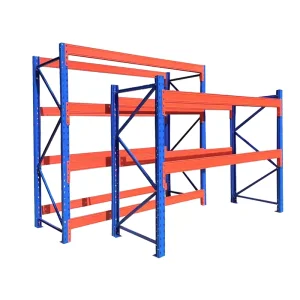
In the contemporary landscape of global logistics, warehousing is no longer merely a holding space for static inventory. It has evolved into a dynamic node in the supply chain where throughput speed, spatial density, and safety intersect. The surge of global e-commerce, combined with Just-In-Time (JIT) manufacturing paradigms, has forced multi-national corporations to re-evaluate their volumetric storage efficiency. Heavy-duty structures, such as cold-rolled steel pallet racks, drive-in systems, and multi-level structural platforms, represent the bedrock of this evolution.
As logistics hubs adjust to rising land acquisition costs, vertical space utilization has emerged as the primary mechanism for cost mitigation. However, stacking materials higher introduces massive mechanical challenges. Structural loading, load-bearing distribution, seismic resilience, and rust prevention are critical calculations that engineers must resolve. Achieving structural reliability requires utilizing raw materials of high tensile strength, precise manufacturing techniques, and rigorous quality auditing programs.
"Globally, industrial racking systems have transitioned from simple structural steel frames into highly engineered, modular architectural elements designed to withstand massive dynamic and static loading pressures under varying environmental conditions."
2. Macro-Environmental Trends Impacting Global Importers
Purchasing managers, distributors, and supply-chain directors must navigate a complex ecosystem of global standards, metal tariffs, and environmental regulations. Key trends driving the market today include:
- Corrosion Protection and Finishing Innovation: Standard spray paints are being phased out in favor of advanced electrostatic thermosetting powder coatings. These provide superior resistance to abrasion, chemicals, and moisture, extending the service life of racking systems in high-humidity or sub-zero temperature environments.
- Modular and Boltless Configurations: The demand for speed has popularized boltless, butterfly-hole, and interlocking designs. These configurations minimize deployment time, allow fast manual adjustment, and reduce maintenance costs.
- Seismic Engineering Compliance: In earthquake-prone zones across the Americas and Asia-Pacific, racking systems must integrate robust baseplates, bracing, and anchor configurations engineered to disperse seismic forces.