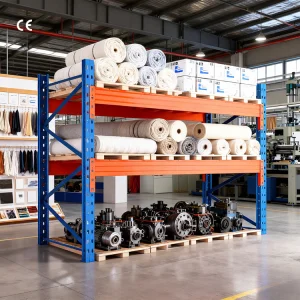
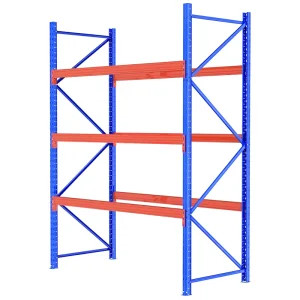
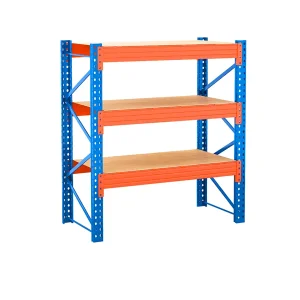
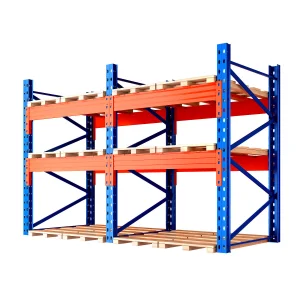
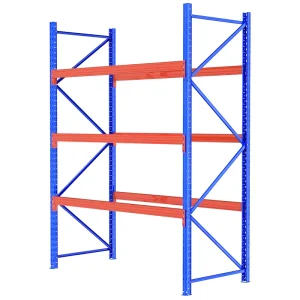
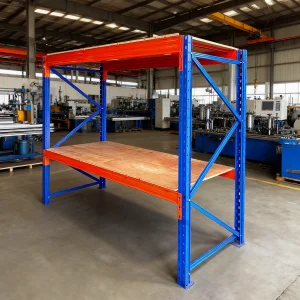
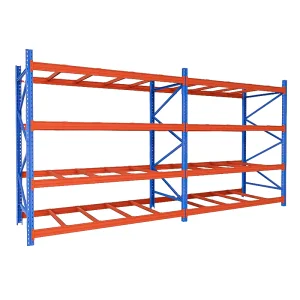
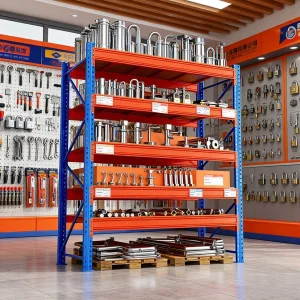
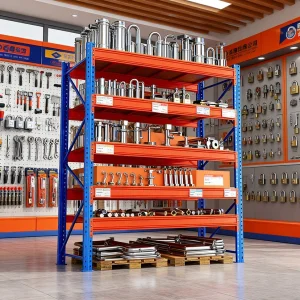
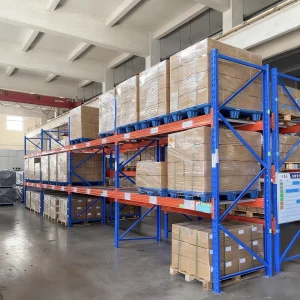
Engineered to comply with stringent Japanese structural safety specifications and local spatial limits.
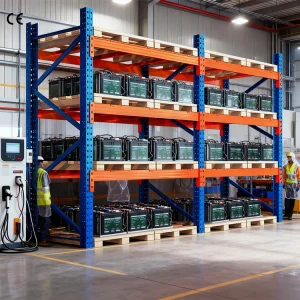
Understanding spatial limitations, seismic requirements, and storage modernization trends in Japan.
Japan represents one of the most sophisticated and challenging markets globally for warehouse planning and storage infrastructure. As land values continue to soar in dense industrial hubs such as Tokyo, Yokohama, Nagoya, and Osaka, logistics providers and manufacturers are forced to optimize vertical capacity. This space crunch has accelerated the transition from conventional racking layouts to high-density heavy-duty shelving systems and Very Narrow Aisle (VNA) configurations. Furthermore, Japan is situated within the Pacific Ring of Fire, making seismic compliance an absolute necessity rather than a secondary design consideration.
In accordance with the Building Standards Act of Japan and Japan Industrial Standards (JIS), all heavy-duty racks installed must meet strict structural standards designed to resist horizontal acceleration under seismic activity. Designers must accurately compute structural responses for racking loads exceeding several tons per bay. This requirement influences the choice of steel raw material, demanding high tensile strengths (like Q235B and Q355B) and heavy-duty frame configurations. Japanese buyers look for structural certifications, robust base plate designs, and floor anchorages capable of absorbing shear energy.
How optimized supply chains and automated manufacturing processes reduce global warehousing capital expenditure.
Across the globe, industrial storage demand is evolving in response to the massive expansion of e-commerce, third-party logistics (3PL), and dynamic inventory distribution models. The modern storage rack is no longer just static iron. It has transformed into an active framework that supports high-speed Automated Storage and Retrieval Systems (ASRS), shuttle systems, and mobile automated guided vehicles (AGVs). Global procurement teams focus on high load capacity, ease of adjustment (such as butterfly-hole design), and scalability.
In this competitive global arena, Chinese manufacturers like Guangzhou Fangjiu Shelf Co., Ltd. bridge the gap between heavy structural engineering requirements and financial optimization. While domestic Japanese fabricators face high production costs and raw material scarcity, Chinese facilities leverage advanced material supply chains, structural engineering software, and automated manufacturing lines to deliver premium racks at competitive price points.
| Technical Parameter | Standard Racking Profile | Fangjiu Heavy Duty Profile | Japanese Warehouse Benefit |
|---|---|---|---|
| Material Spec | Mild Steel Q235 | High-strength Q235B / Q355B | Higher load capacity with thinner profiles |
| Seismic Coefficient | 0.1g - 0.2g resistance | Calculated up to 0.6g+ (JIS compliant) | Safety assurance in earthquake zones |
| Powder Coating | 35-50 microns thickness | 65-90 microns thick epoxy-polyester | Prevents corrosion in coastal ports |
| Roll-Forming Tech | Manual setup cold-forming | Automatic continuous CNC rolling lines | Precision dimensioning with +/- 0.5mm tolerance |
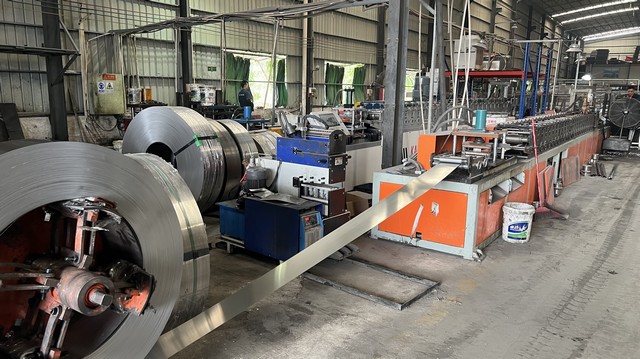
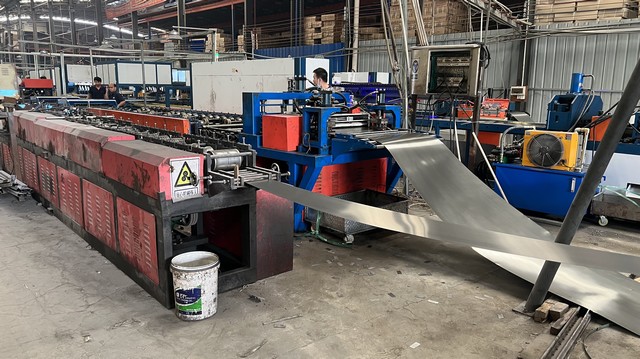
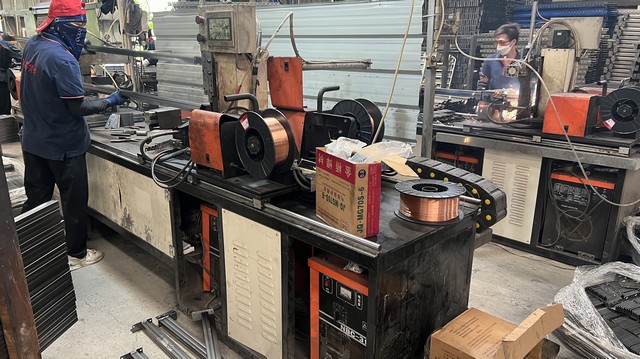
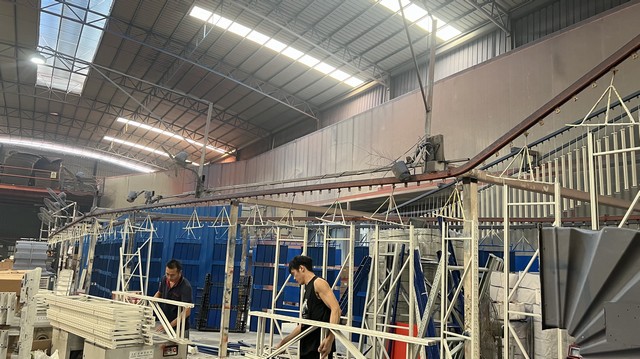
By implementing advanced automation, computerized welding robots, and fully integrated electrostatic powder coating lines, Chinese manufacturers achieve production cycles that are up to 40% faster than regional competitors in Asia. This scale allows international buyers, including those in Japan, Western Europe, and North America, to procure bespoke heavy-duty shelving solutions without the typical cost premiums or prolonged lead times associated with custom-made warehouse structures.
Your Premier Global Partner for Heavy-Duty Racking and Industrial Storage Systems
Guangzhou Fangjiu Shelf Co., Ltd. is a premier manufacturer and global provider of heavy-duty warehouse racking and industrial storage systems. Established in 2015, the company operates a modern manufacturing facility spanning 32,000 square meters, serving as a trusted backbone for global supply chain optimization. With 16 years of deep industry expertise and 8 years of dedicated international export experience, Fangjiu Shelf delivers high-caliber storage solutions engineered for durability, safety, and operational efficiency. Driven by strong trade backgrounds and robust commercial capabilities, we generate over $18 million in annual export turnover, exporting high-performance storage products to major markets across North America, Western Europe, and Southeast Asia.
Quality assurance is embedded in every stage of our operations. Supported by a rigorous Quality Management System (ISO 9001, CE certified) and a dedicated team of 35 quality control personnel, every batch undergoes comprehensive raw material testing, robotic weld inspection, load-bearing stress tests, and powder-coating thickness audits. Our extensive industry integration connects us with over 850 reliable supply chain partners, allowing us to supply diverse global clients—ranging from multinational logistics centers and industrial distributors to commercial retail brands. Backed by advanced R&D capabilities, including 18 specialized mechanical and design engineers, we offer full OEM/ODM custom options—including custom dimensioning, load capacity engineering, color matching, and special seismic structural design. Demonstrating our commitment to continuous innovation, Fangjiu Shelf successfully launched 45 new optimized storage products last year, continuing to set standards for warehouse safety and efficiency worldwide.
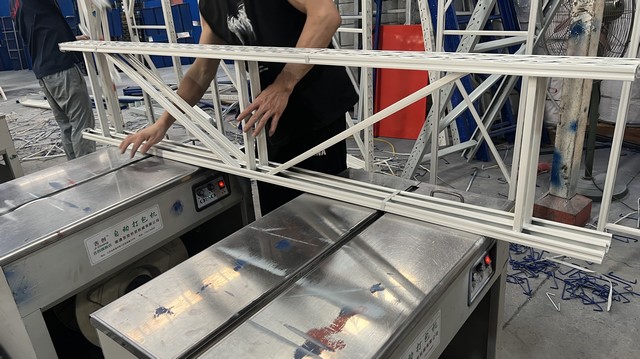
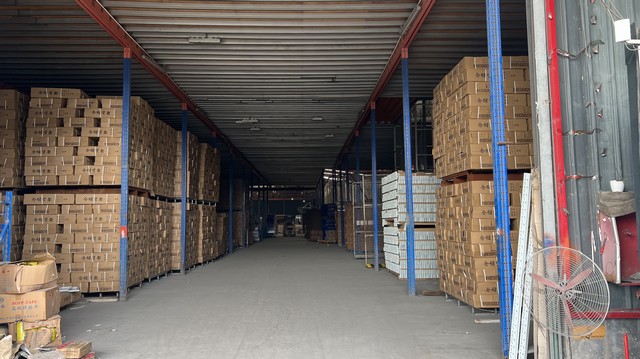
Providing engineered storage answers across various key Japanese vertical industries.
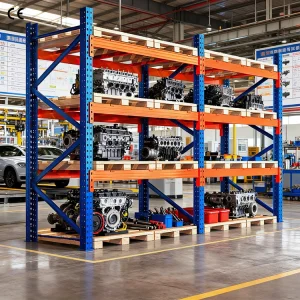
Automotive assembly requires high-density storage for extremely heavy components, including engine blocks, dies, and body stampings. Our customized double-depth pallet racks and cantilever systems are designed to handle loads from 2,000kg to over 4,000kg per layer, with seismic limiters to protect inventory from shifting.
Sub-zero environments test structural materials. Our specialized corrosion-protection pallet racking features specialized hot-dip galvanized steel coatings. They are designed to withstand temperatures down to -30°C without metal embrittlement or structural cracking, maximizing seafood distribution density.
To process thousands of individual orders daily, multi-layer racking layouts are paired with automated vertical lifts. Integrating butterfly-hole structures allows for swift vertical beam re-alignment as SKU dimensions change, ensuring warehouse agility.
For long structural parts, tubing, and raw lumber, traditional pallet racks are not suitable. Our custom Q235 steel heavy-duty cantilever racks provide open front structures to accommodate long profiles, and can be integrated with overhead crane systems.
Explore our full line of engineering-grade storage systems designed for durable warehousing.
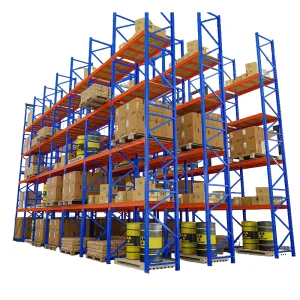
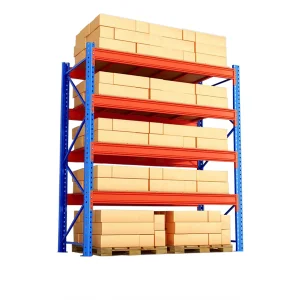
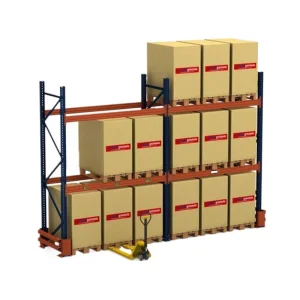
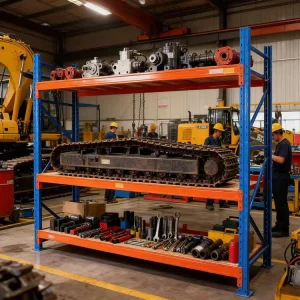
A professional verification checklist for supply chain directors, logistics managers, and safety compliance officers.
When engineering high-density warehouse storage systems, procurement teams should establish a structured validation process rather than comparing unit prices alone. Poorly fabricated structural steel elements under heavy static pressure present severe safety hazards. The following technical verification protocol outlines essential criteria for industrial-grade racking procurement:
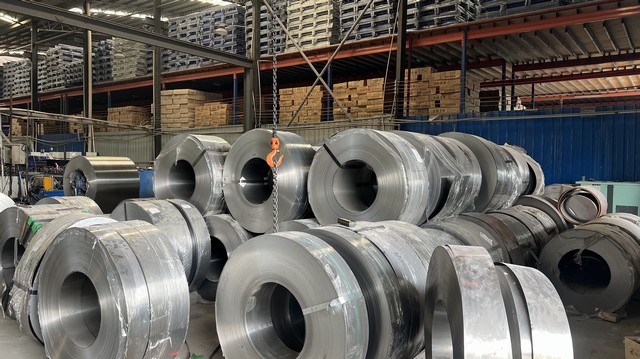
The strength of a storage rack is determined by the chemistry and grade of its steel. Industrial upright columns and horizontal load beams should utilize structural-grade hot-rolled carbon steel, such as Q235B (minimum yield strength 235 MPa) or Q355B (minimum yield strength 355 MPa). Suppliers must provide mill test certificates (MTC) indicating chemical composition (carbon, manganese, silicon, phosphorus, and sulfur content) and mechanical stress-test reports.
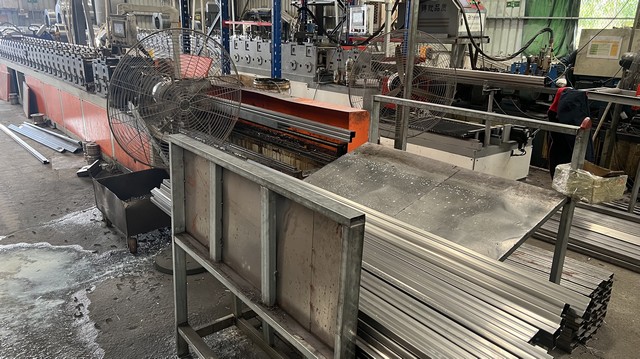
Consistent upright profiling is crucial for load distribution. Cold-roll-forming lines must maintain a dimensional tolerance profile under +/-0.5mm. Deviations in connection points or butterfly holes can lead to uneven beam engagement, localized stress concentration, and structural deflection under maximum rated capacity.
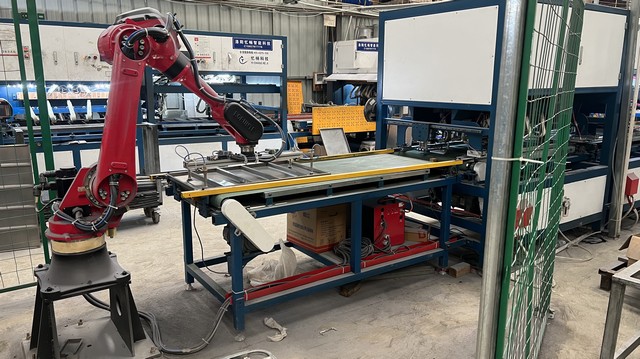
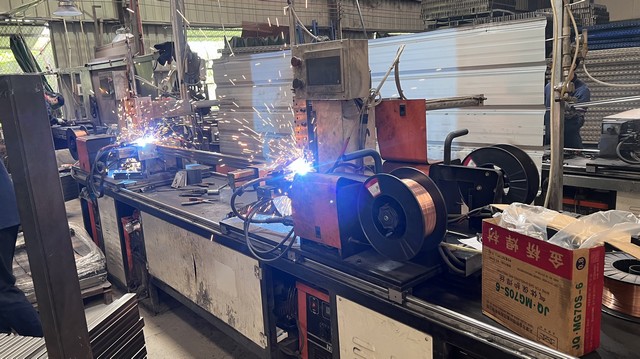
The connection weld between the horizontal load beam and the vertical connector plate is a critical stress point. Manual welding can lead to inconsistent penetration and micro-cracking. Automated robotic gas metal arc welding (GMAW) ensures deep penetration, consistent bead quality, and eliminates structural weak spots.
Industrial storage facilities are often subject to temperature swings, humidity, and chemical exposure. A standard powder coat finish of 30-40 microns is susceptible to scratching, which can lead to oxidation and structural degradation. For logistics hubs located near maritime ports or in unconditioned warehouses, specify electrostatic epoxy-polyester coatings between 65 to 90 microns, validated by ASTM B117 salt spray exposure testing.
Technical answers regarding seismic design, material specifications, import processes, and customization.
 Fangjiu Shelf