 Fangjiu Shelf
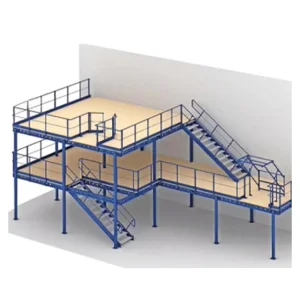
Explore the flagship industrial storage solutions deployed across South Korea's distribution corridors. Engineered for high spatial efficiency, seismically rated to KDS compliance, and optimized for heavy load tolerances.
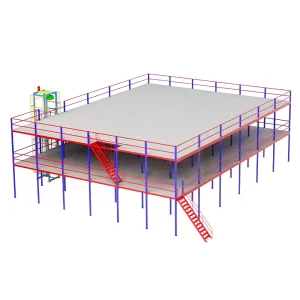
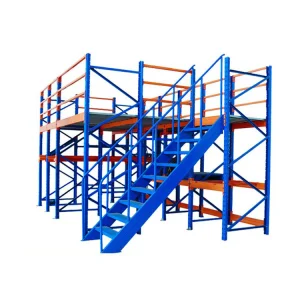
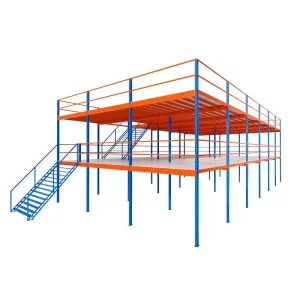
The Seoul Capital Area—encompassing Seoul, Incheon, and Gyeonggi-do—functions as the economic powerhouse of South Korea, containing over 50% of the country’s population and driving its complex logistical network. Driven by the explosive growth of local e-commerce giants, such as Coupang and Market Kurly, and the intensive export-import operations through Incheon International Airport and Port of Incheon, the demand for warehouse space has reached unprecedented heights.
However, local industrial land availability in metropolitan Seoul is strictly constrained by geographical limits, urbanization zoning, and high land acquisition costs. This spatial compression has forced a fundamental paradigm shift: logistics developers and warehouse operations must move from horizontal expansion to vertical maximization. High-density, multi-tier industrial structural platforms (Mezzanines) and heavy-duty adjustable pallet racking systems are no longer luxury additions—they are critical infrastructure assets required to maintain competitive margins in South Korea.
South Korea is not immune to seismic activity, and safety compliance is highly regulated. In recent years, the Ministry of Land, Infrastructure and Transport (MOLIT) has updated the Korean Design Standards (KDS), demanding rigorous structural integrity verification for steel storage racks. Storage racking systems must be structurally analyzed using Finite Element Method (FEM) software, calculating dynamic responses under load combinations that factor in regional seismic coefficients.
For industrial plants operating in Seoul and Gyeonggi-do, compliance with KDS 41 (Korean Building Code) is mandatory. Heavy-duty structures must utilize Q235B, Q355B (standard hot-rolled carbon steel structural shapes) or high-grade POSCO steel alternatives Sm490 or SS400, assuring stability, load distribution, and ductile deformation resistance.
| Steel Grade Standard | Yield Strength (MPa) | Tensile Strength (MPa) | Recommended Industrial Application |
|---|---|---|---|
| Q235B / SS400 Equiv. | ≥ 235 | 375 - 460 | Standard pallet racking uprights, bracing, and medium-capacity shelves. |
| Q355B / SM490 Equiv. | ≥ 355 | 490 - 620 | Heavy-duty structural mezzanine columns, I-beams, and long-span platforms. |
| POSCO HC340LA | ≥ 340 | 410 - 510 | Precision cold-rolled roll-formed racking sections with high yield ratio. |
An objective, comparative overview of the manufacturing facilities optimized to design, export, and support heavy industrial racking solutions tailored for South Korean enterprises.
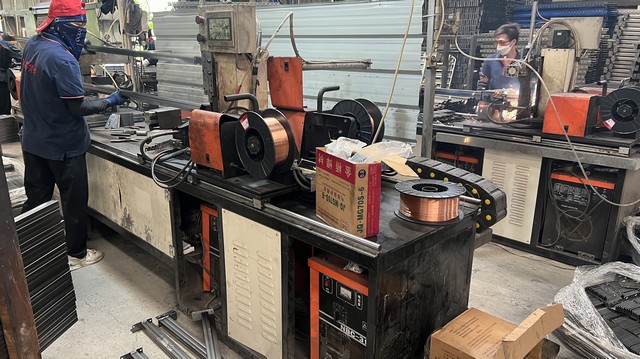
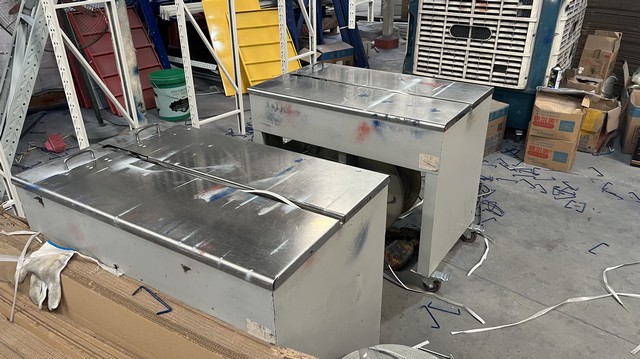
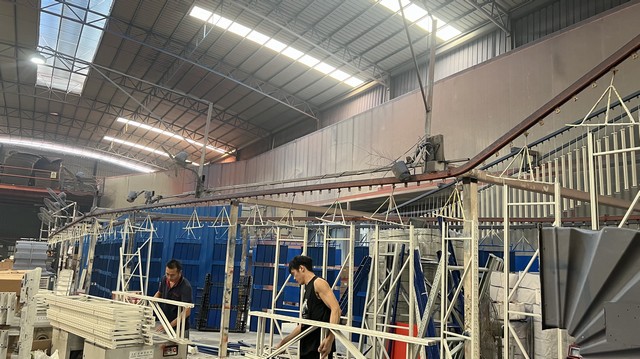
Established in 2015, Guangzhou Fangjiu Shelf Co., Ltd. has grown to become a premier global manufacturer and direct exporter of heavy-duty warehouse racking and industrial structural systems. Operating out of a state-of-the-art 32,000 square meter facility, Fangjiu Shelf serves as the reliable backbone for global supply chain optimization. Backed by 16 years of deep industrial expertise and 8 years of international export logistics, the company focuses on engineered durability, high load efficiency, and comprehensive structural safety.
Fangjiu Shelf manages an extensive international pipeline generating over $18 million in annual export turnover, supplying critical industrial projects across North America, Western Europe, and highly demanding East Asian logistics zones—specifically South Korea. Quality assurance is meticulously integrated: certified to ISO 9001 and carrying the CE mark, the facility maintains 35 dedicated QC engineers executing raw material chemical composition analysis, ultrasonic weld inspection, dynamic load deflection tests, and epoxy powder-coating thickness audits.
With an integrated supply network comprising 850+ trusted partners, Fangjiu Shelf meets the requirements of third-party logistics (3PL) centers, cold storage operations, and manufacturing plants. Their R&D division, featuring 18 structural and mechanical engineers, provides full OEM/ODM capabilities, designing customized load structures, seismic base plate configurations, and multi-tier mezzanine decks that comply with Korean KDS safety frameworks. Last year alone, the company introduced 45 new product variants, keeping pace with warehouse automation developments.
Operating out of the steel fabrication hub of Jiangsu Province, this facility specializes in automated storage and retrieval systems (AS/RS) and shuttle racking. They provide direct export pathways to Incheon Port, with products optimized for seamless integration with Korean warehouse management software (WMS).
Focusing on high-precision roll-formed columns and beams, this exporter utilizes advanced German-designed rolling mills. This makes them a preferred partner for retail chains and light manufacturing centers across Seoul requiring customizable wire decking and light-to-medium-duty storage configurations.
Located near one of the world's busiest ports, this supplier has built a reputation on fast transit and structural heavy-gauge steel processing. Their engineering department specializes in marine and port-adjacent warehouse racking, focusing on corrosion protection and zinc-coated finishes suitable for maritime humidity.
Specializing in hot-dip galvanized structural profiles, this manufacturer delivers specialized components for cold-chain facilities. Their proximity to South Korea ensures short sea transit times and lower shipping costs to Incheon, facilitating quick-turnaround replenishment projects.
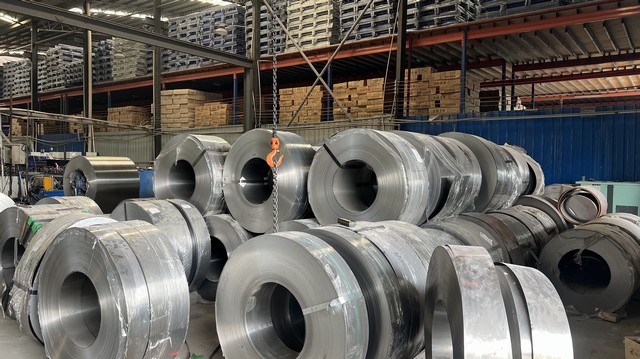
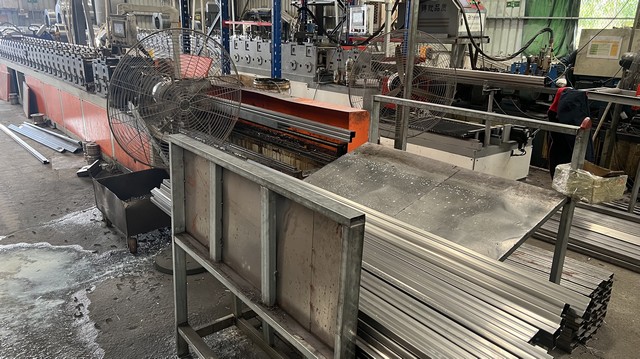
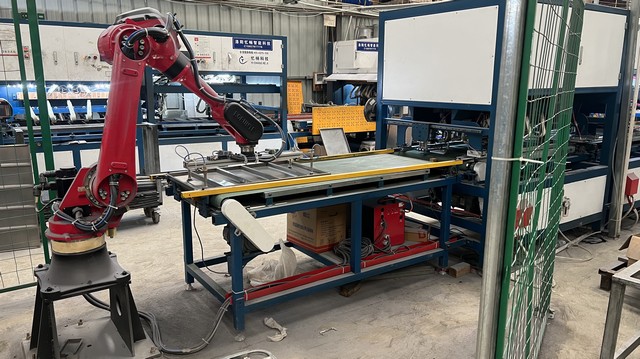
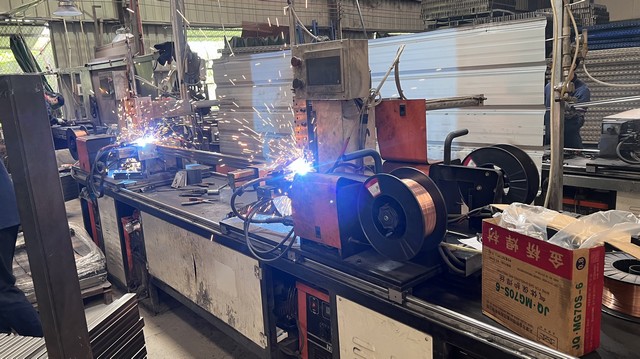
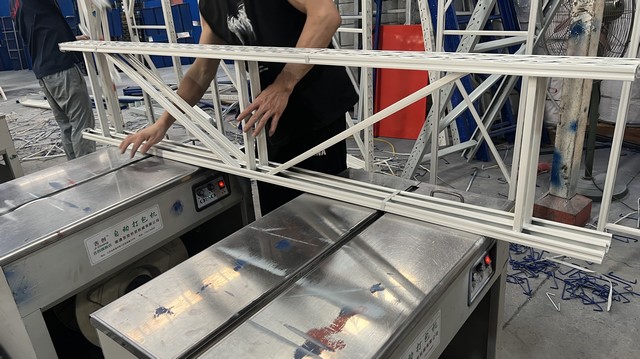
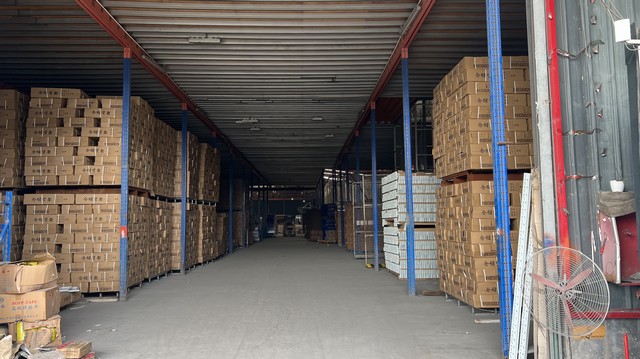
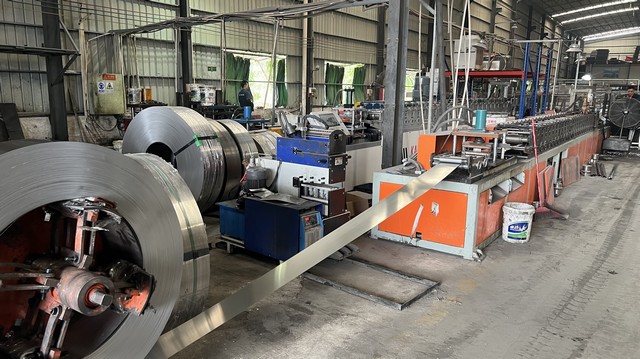
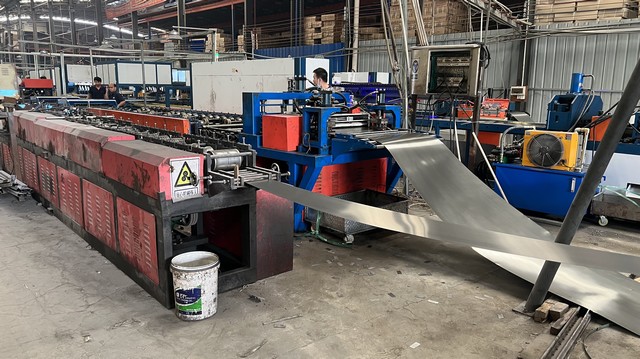
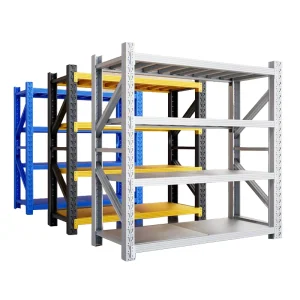
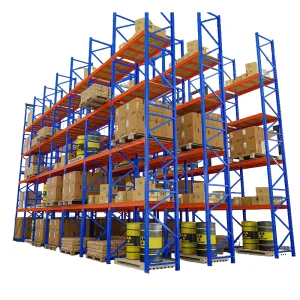
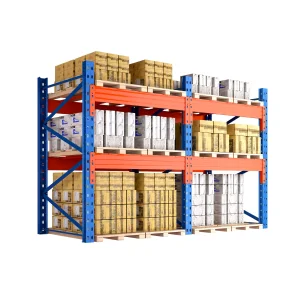
Heavy-duty, adjustable storage shelves and multi-functional narrow aisle configurations designed for optimal volume utilization.
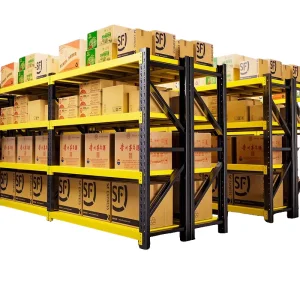
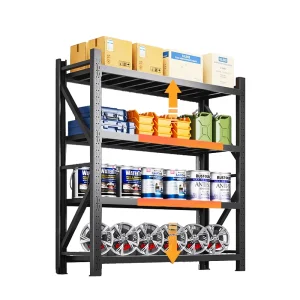
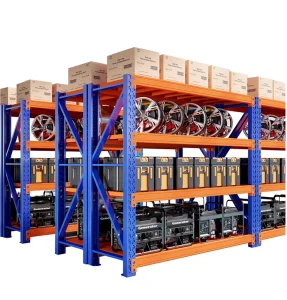
Industrial spatial demands differ significantly depending on the municipality within the capital region. Racking design must match these regional application scenarios to guarantee compliance and operational flow.
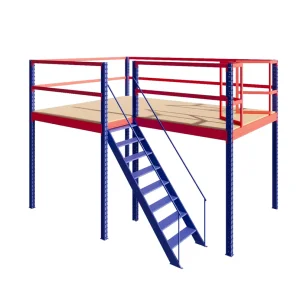
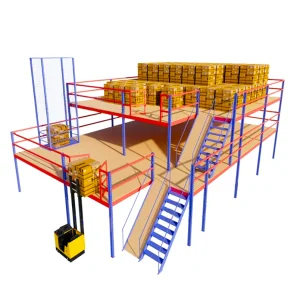
High-density urban multi-story vertical factories (Knowledge Industry Centers) require space-optimized mezzanines. Our platforms double or triple existing floor areas without modifying the structural concrete footprint of the building, matching floor load regulations (normally 500-1000kg/㎡).
Large-scale fulfillment centers servicing overnight national delivery systems. These hubs deploy heavy-duty I-Beam platforms and Narrow Aisle (VNA) systems up to 15 meters high, optimized for dynamic reach trucks and automated guided vehicle (AGV) pathing.
Imported seafood, meats, and fresh pharmaceuticals require cold storage environments (-25°C to -40°C). Racks deployed here must feature structural zinc-plated and powder-coated steel finishes to prevent rust, micro-cracking, and structural failure from thermal contraction.
The warehousing sector is undergoing rapid digital transformation. Traditional static storage solutions are shifting toward automated, data-driven frameworks. Modern racking systems must be engineered with advanced robotics integration in mind:
Explore our heavy-duty industrial series, featuring high corrosion resistance, anti-rust coatings, and modular design for complex distribution needs.
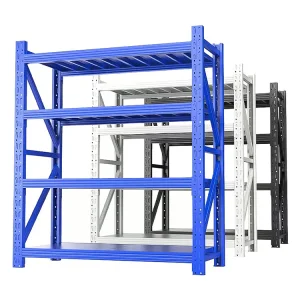
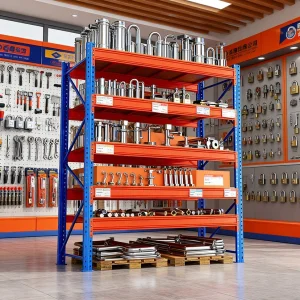
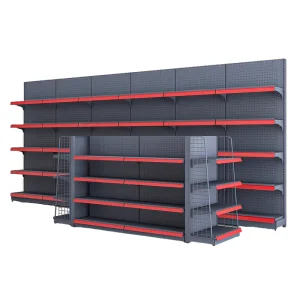
Common questions answered by our structural engineering and export compliance department for operations in Seoul and surrounding territories.
To comply with domestic building codes, all racking platforms must undergo structural testing. During the engineering phase, we generate 3D Finite Element Analysis (FEA) models, verifying deflection, yield margins, and overturning moments against localized ground acceleration variables for Seoul (typically 0.176g to 0.22g based on soil classification). Detailed seismic calculation reports are provided for submission to local safety inspectors.
Once engineering drawings are approved, production at our facility takes approximately 20 to 30 days. Shipping from southern ports (like Guangzhou or Shenzhen) to Incheon Port requires 4 to 6 days of sea transit. Clearing customs and inland trucking to warehouses in Gyeonggi-do takes an additional 2 to 3 days, making the total timeline approximately 30 to 40 days.
Yes. Cold-chain storage requires cold-resistant, high-adhesion coatings. We utilize dynamic electrostatic powder coating lines running cured epoxy-polyester formulas (minimum thickness 70-80 microns). This prevents cracking and peeling at temperatures down to -40°C. For extreme moisture environments, we offer hot-dip galvanized components (ISO 1461 compliant) that provide active zinc-alloy barrier protection.
We provide a complete documentation package, including the original Bill of Lading, Commercial Invoice, Packing List, Certificate of Origin (under the China-Korea FTA for zero or reduced tariffs), Mill Test Certificates (confirming steel grade mechanical properties), and ISO 9001/CE Quality Compliance Certificates.
All our industrial designs operate with a minimum safety factor of 1.5, matching FEM 10.2.02 and RMI standards. Our in-house testing division subjects upright profiles, beam connections, and load decks to rigorous physical press tests to determine elastic limits. Every shipment carries a load-limit plate indicating safe load configurations.